Mulch is the bed material we put around plants, and it goes in on a sod installation visit or with landscaping. It holds moisture at the roots, keeps the soil cooler through a North Port summer, and looks right around ornamentals. Rock does the other job: a dry buffer along the foundation and the hard edges. Most yards here end up with both. The way that split works is the rock or mulch guide.
A rock or mulch bed runs $3–$9 per square foot. The spread is the material and how much old mulch or rock has to come out and leave. That is a range, not a bid. A ribbon of rock that is only a border, with no bed behind it, may not use this rate. This page is the bed. The site has one mulch page. It does not split pine, cypress, or melaleuca. Those names wait until the crew says which product is on the truck.
Where mulch belongs
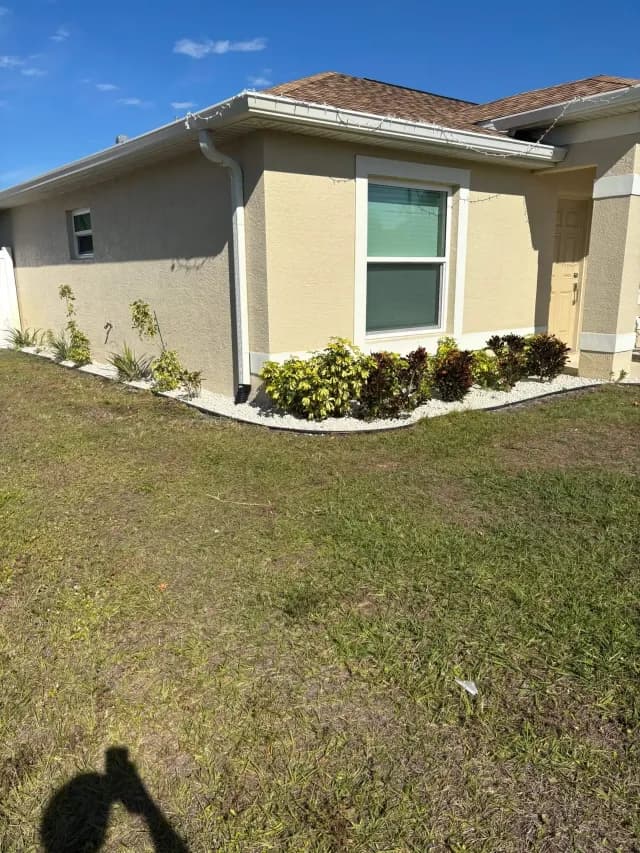
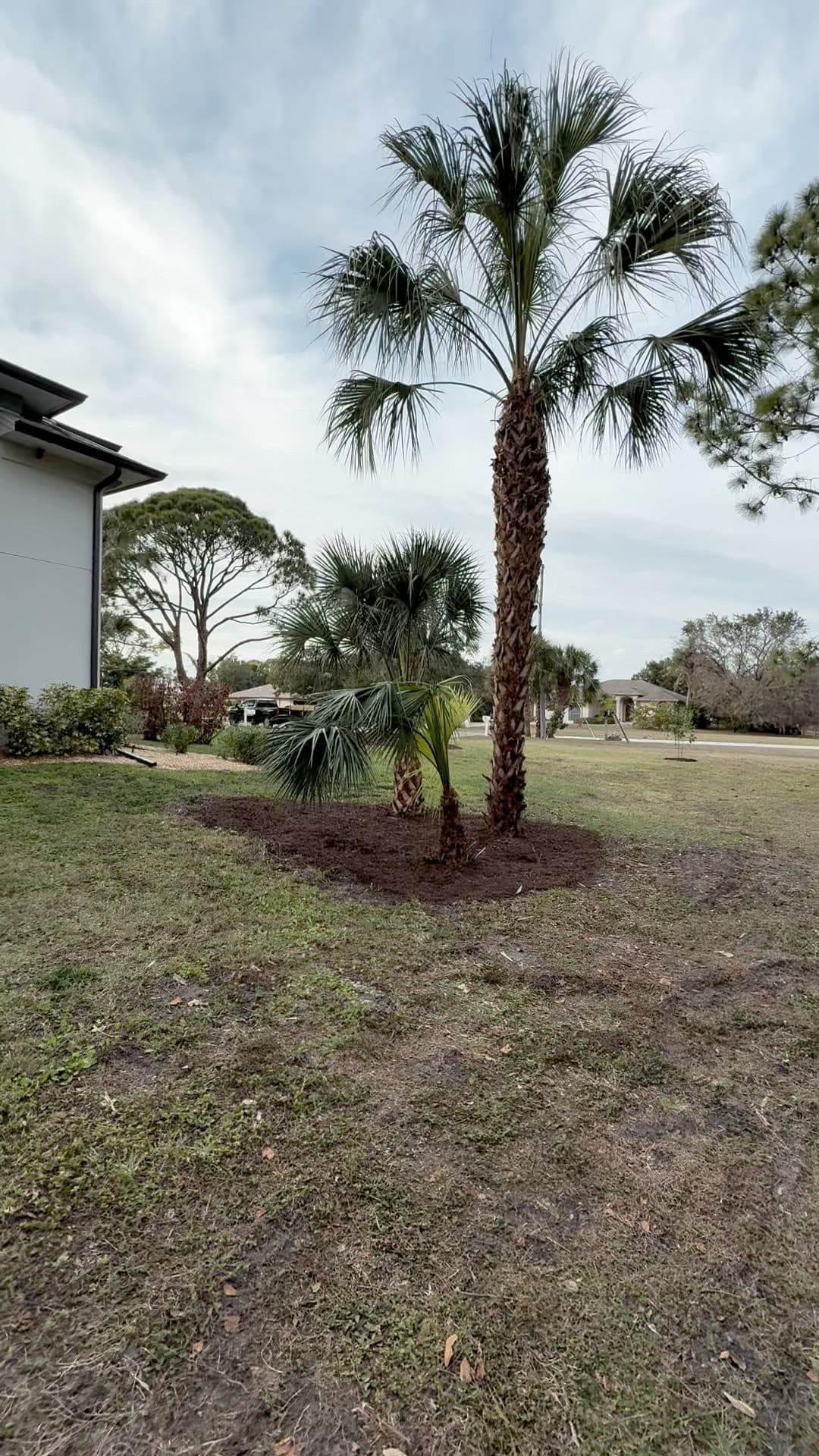
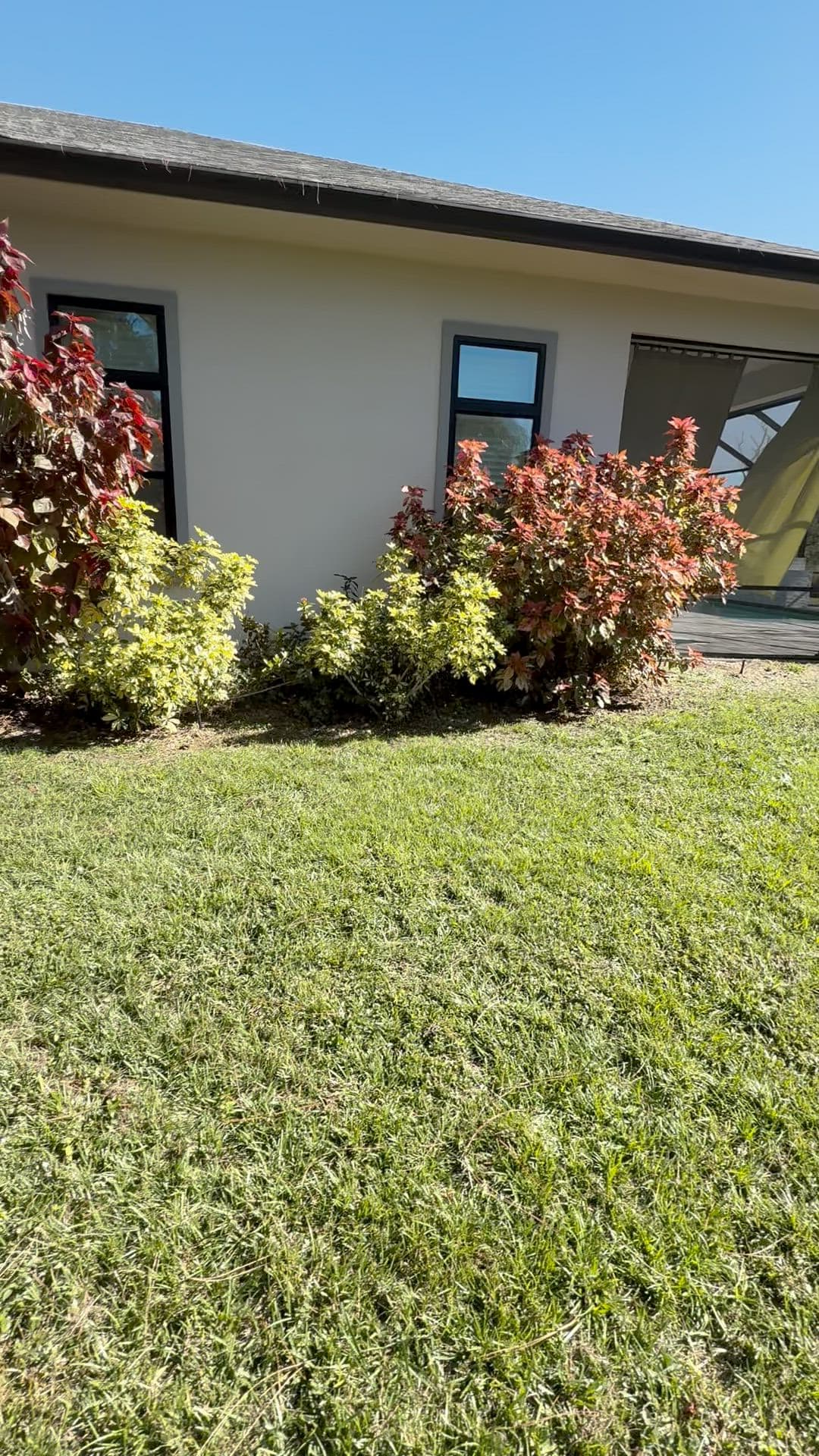
Use it around the shrubs, the crotons, the new palms, and the planting beds that need water held in the root zone. The gallery shows that use: foundation shrubs mulched along a house, queen palms in a fresh mulch bed, and a croton bed along a mowed lawn. Those photos are the look. They are not labeled with a wood species, and this page will not invent one.
Keep it off the slab. Mulch holds moisture, which is the point around a root and the problem against siding. A bed piled into the wall stays wet in a way rock does not. In our humidity, mulch can also hold fungus and pests that a rock strip does not. That is why the foundation buffer is rock and the ornamental bed is mulch. Mixing them on purpose is normal. Using mulch for both jobs is how the edge of the house stays damp.
Sun, water, and the coast
Mulch is not a sun plant. It is cover. The plants in the bed still have to match the light. A dark side yard can take mulch and shade plants. It should not take Floratam. Watering a new bed is part of the aftercare we explain before we leave. We do not publish a minute chart for it. Sun and rain here break mulch down faster than a cooler climate, so most yards need a refresh once or twice a year, a spring top-off and sometimes a fall one.
Salt spray speeds that breakdown. A bed that still looks right in central North Port can look spent on a Placida canal lot in the same season. For Englewood, Placida, and Gulf Cove we steer the bed toward salt-tolerant mulch products. The page still does not name the species. The job is still a bed at $3–$9 per square foot as a range. Rock remains the material against the wall, including on those lots, because it does not hold water on the slab.
A new bed or a pile
A new bed is this price. A mountain of old mulch left from a previous job, with no new bed going in, is haul-off. Yard debris removal runs $150–$600, and old mulch is one of the piles that service already names. Bundling the haul with a bed that is already scheduled is usually cheaper than a separate trip. The written quote says which one you are buying.
We pull worn-out material, set the grade so the bed does not dump water at the house, and install edging that holds the line. Plant choice, if the bed is part of a design, is the landscape visit. If you already know the bed is mulch around the plants and rock at the wall, book it with sod installation.