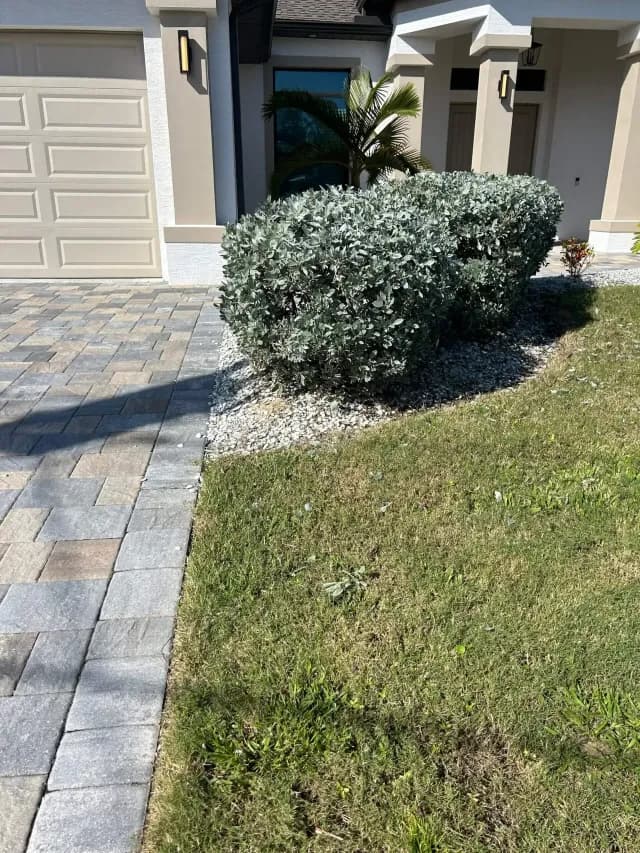
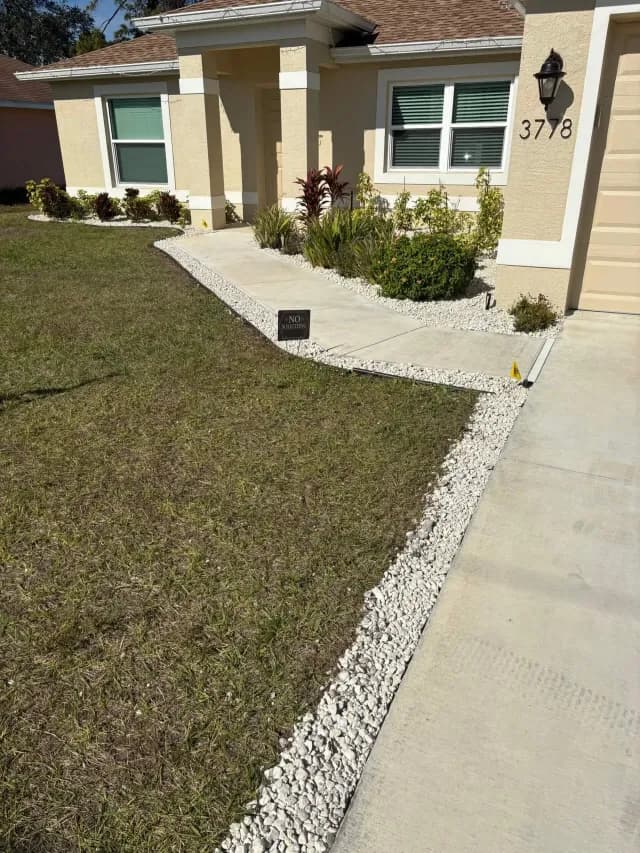
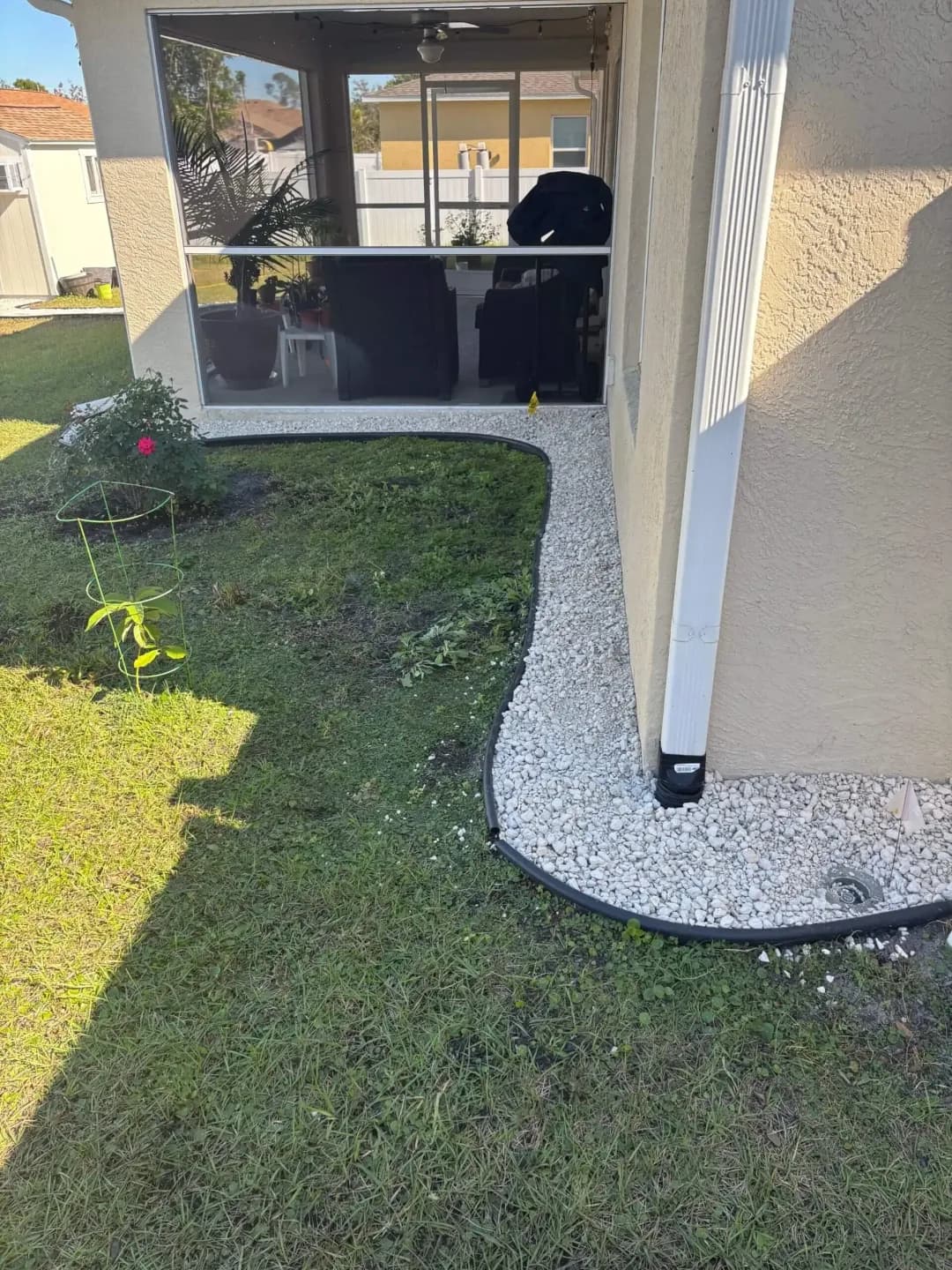
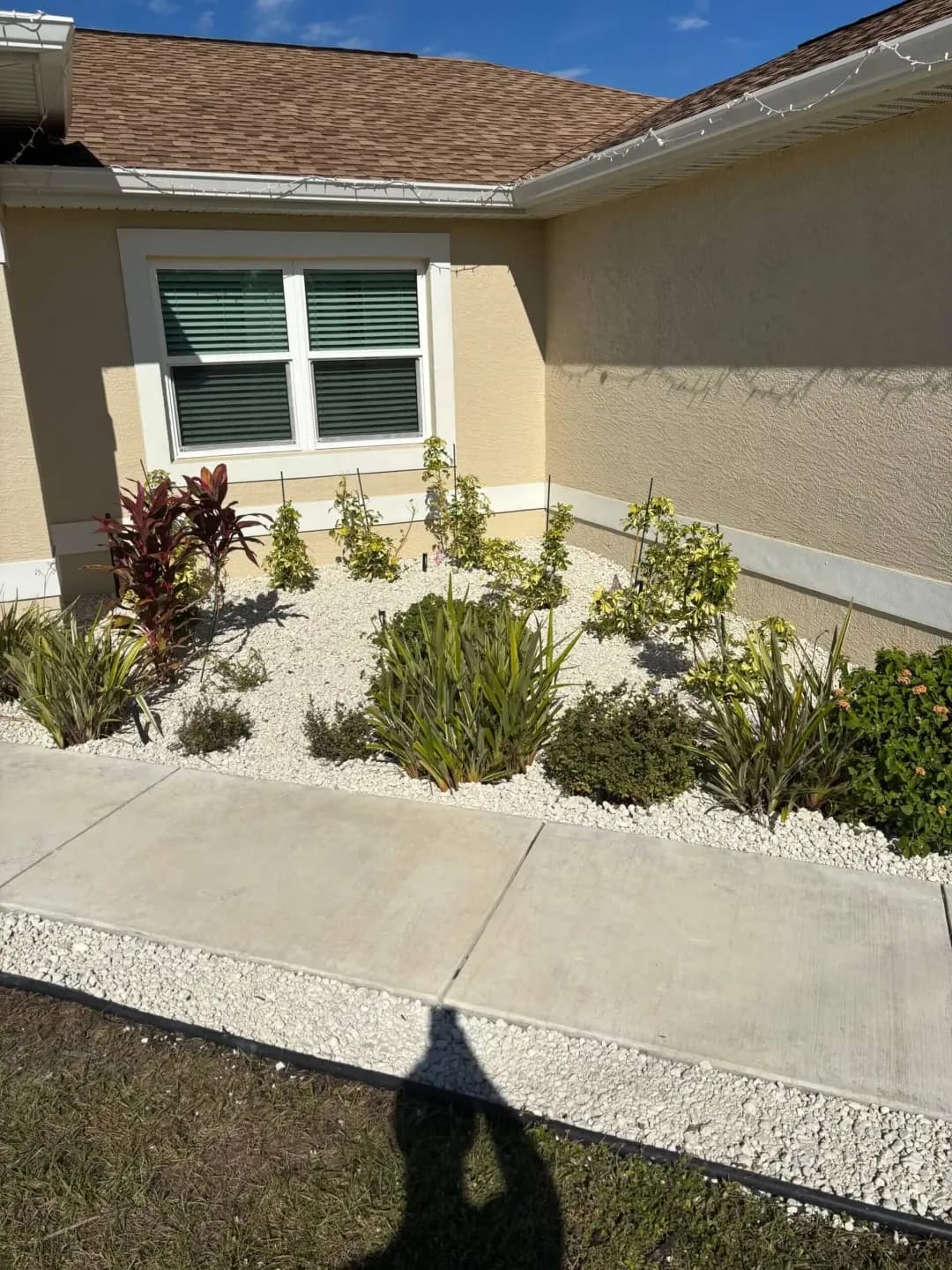
White rock borders are the edge we set to hold a bed line, and the work is booked as sod installation when the visit is rock, mulch, or new lawn. The gallery shows the look: a trimmed hedge with a white rock border along a driveway, a clean white edge on a walkway and drive, and a white rock border along the back of a screened lanai. A fourth photo shows a new shrub bed in white rock mulch, so the same stone also shows up as bed fill, not only as a ribbon. None of those photos are tagged with a town or a year. They are examples of the edge, not a catalog.
How that edge is priced is the rock border guide. A rock or mulch bed, the area and not the ribbon, runs $3–$9 per square foot. A border alone may not use that rate. There is no published price per linear foot. If the white rock is a wide bed, you are in the bed band. If it is a single line along an existing walk, we quote it from the work in front of us. That is a range or a site quote, not a bid you can multiply from the sidewalk.
What the photos are showing
The border photos are a light stone holding a line beside grass, a drive, a walk, or a lanai. They are not poured curbing, and they are not pavers. We do not pour concrete curbing or lay pavers. If that is the edge you want, it is another trade, and we can meet our rock to it. If the edge you want is the white rock already in the photos, the product is this one.
The shrub-bed photo is white rock used the way mulch is used, as the cover inside the bed, with plants staked in it. That is closer to a river-rock bed in shape and closer to these borders in color. Call it what the picture shows. Do not send a driveway ribbon and expect the bed rate, and do not send a full bed and expect a border price. The first question on the walk is which of those two is in the yard.
Sun, water, and the coast
White rock does not need sun. It sits in the sun beside a drive all day without a watering schedule. It also does not hold moisture against a wall the way a mulch pile does, which is why a light stone reads as a clean buffer. Plants that need a cool root zone still belong in mulch. A border with a hedge behind it, like the driveway photo, is stone at the line and plants behind it.
Salt spray does not rot rock the way it spends ordinary mulch. Englewood, Placida, and Gulf Cove are where we steer bed materials toward salt-tolerant rock. The gallery is not labeled by town, so these photos are not a claim about a coastal job. The rule is the same either way: rock at the hard edge, and a border quoted on site when it is only a ribbon. We do not name a brand or a bag size.
How it goes in
On a sod visit the sequence is explicit. Old material comes out, the grade falls away from the house, the sod or the bed goes down, and edging holds the line. White rock is that line when the photos are the look you want. Length, width, curves, and old edging that has to come up all change the work. A linear-foot guess over the phone does not. Access matters. A long curve matters.
Send the walk or drive in daylight and say whether a bed sits behind the ribbon. We will match the quote to that, not to a per-foot number this site does not have. The place to book the install is sod installation.